120 pages
Six parts, twenty-seven chapters
— Real homeowners · real numbers —
The loan you signed is not the loan you are paying. Escrow recalculates. Insurance gets force-placed. Servicers change hands and lose payments. PMI keeps coming out long after it should have stopped. None of it arrives as a warning — it arrives as a new number on a statement. Here is what that looked like for six homeowners.

“My payment went up $327 a month and the servicer had used the wrong tax figure.”
The letter just said the escrow account had been recalculated. I assumed that meant my taxes had gone up, because what else would it mean. Chapter 11 has a worksheet for auditing the statement line by line, so I did it — and the annual property tax figure they had used was from the previous owner's assessment, before the exemption I qualify for was applied. One phone call, one document, and they re-ran it. The payment came back down and they refunded the overcollection.
Get the same book Ryan used — $19.99 →— The Mortgage Protection Guide —
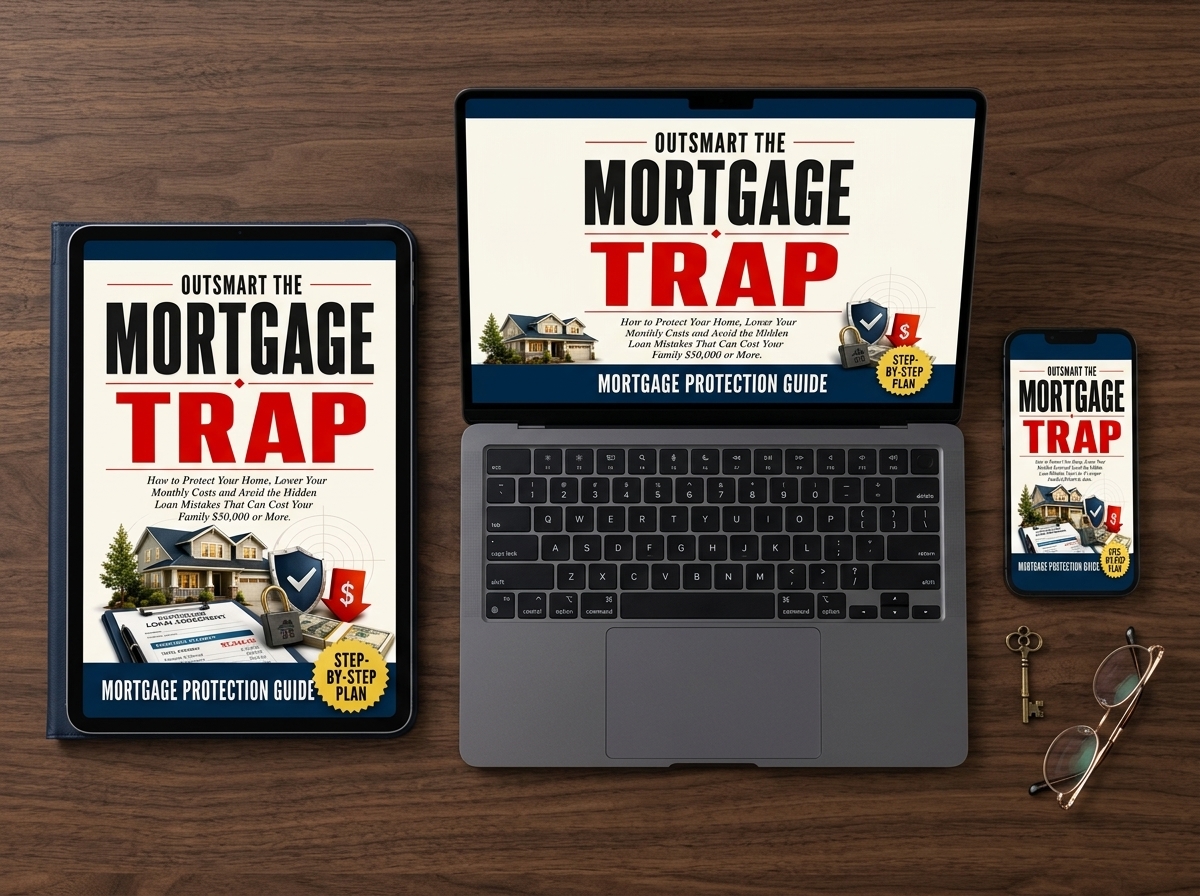
How to Protect Your Home, Lower Your Monthly Costs and Avoid the Hidden Loan Mistakes That Can Cost Your Family $50,000 or More.
Instant PDF · phone, tablet & computer · yours forever · 7-day guarantee

— Reader case study —

“I paid PMI for two and a half years after I should have stopped.”
Nobody told me it does not just fall off. I had crossed 20% equity through a combination of paying down and prices rising in my area, and I sat there paying $142 a month for another thirty-one months because I was waiting for a letter that was never coming. Chapter 14 explains that you have to request removal in writing, and it explains what evidence they can ask for. I sent the letter, paid for an appraisal, and it was gone in six weeks. That delay cost me around $4,400 for no reason at all.
Get the same book Chloe used — $19.99 →— Everything included —
Six parts, twenty-seven chapters
Checklists, logs and worksheets
Phone, tablet & computer
Full refund, no questions
“Approval is not affordability. A lender is telling you what they are willing to risk — not what your family can survive.”
Almost nobody loses a home because of the interest rate. They lose it because the payment quietly grew, or a servicer made an error nobody caught, or a hardship option existed that nobody told them about until the window had closed.
— Reader case study —
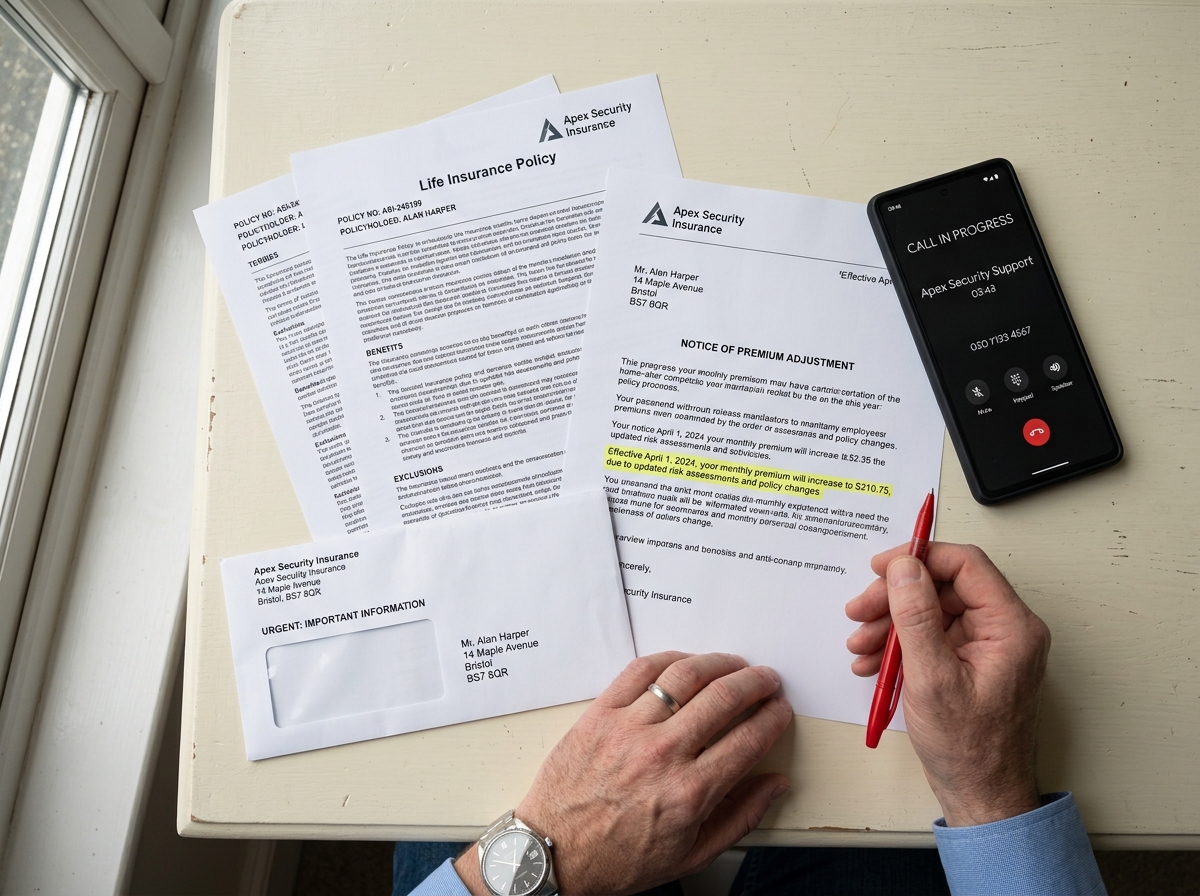
“They force-placed insurance on my house and I never got the notice.”
My insurer changed my policy number and the renewal confirmation never reached the servicer. So the servicer bought a policy on my behalf — a lender-placed policy that covers their interest, not mine — and charged it to my escrow at roughly four times what I was already paying. Chapter 13 explains exactly what force-placed insurance is and how to get it reversed, including what proof of continuous coverage means. I got it removed and back-credited, but if I had not known the term existed I would simply have assumed my insurance had gone up.
Get the same book Victor used — $19.99 →— Four habits that protect a mortgage —
No refinancing pitch, no jargon, no advisor required. Four habits that keep a mortgage from quietly getting more expensive every year.

Three lenders, same day, same loan amount — then compare page 2, not the headline rate. Chapter 5. Origination fees, discount points, lender credits and third-party charges are where the real difference hides, and the form is standardised specifically so you can lay them next to each other.

Twenty minutes with your annual escrow statement, checking the tax figure, the insurance figure and the cushion the servicer is holding. Chapter 11. Escrow is the single most common reason a payment rises, and servicer miscalculations are far more frequent than homeowners assume.

Work out the month you reach 20% equity, write it in your calendar, and send the written removal request yourself. Chapter 14. PMI does not fall off automatically at the moment you qualify — thousands of homeowners keep paying it for years after they were entitled to stop.

The moment income drops, you call the servicer and ask for the hardship options by name — forbearance, deferral, modification. Chapter 21. Nearly every protection available to homeowners requires early contact; the ones who wait until three payments are missed find most doors already shut.
— Inside the guide —
27 chapters across 6 parts, plus 7 printable tools.
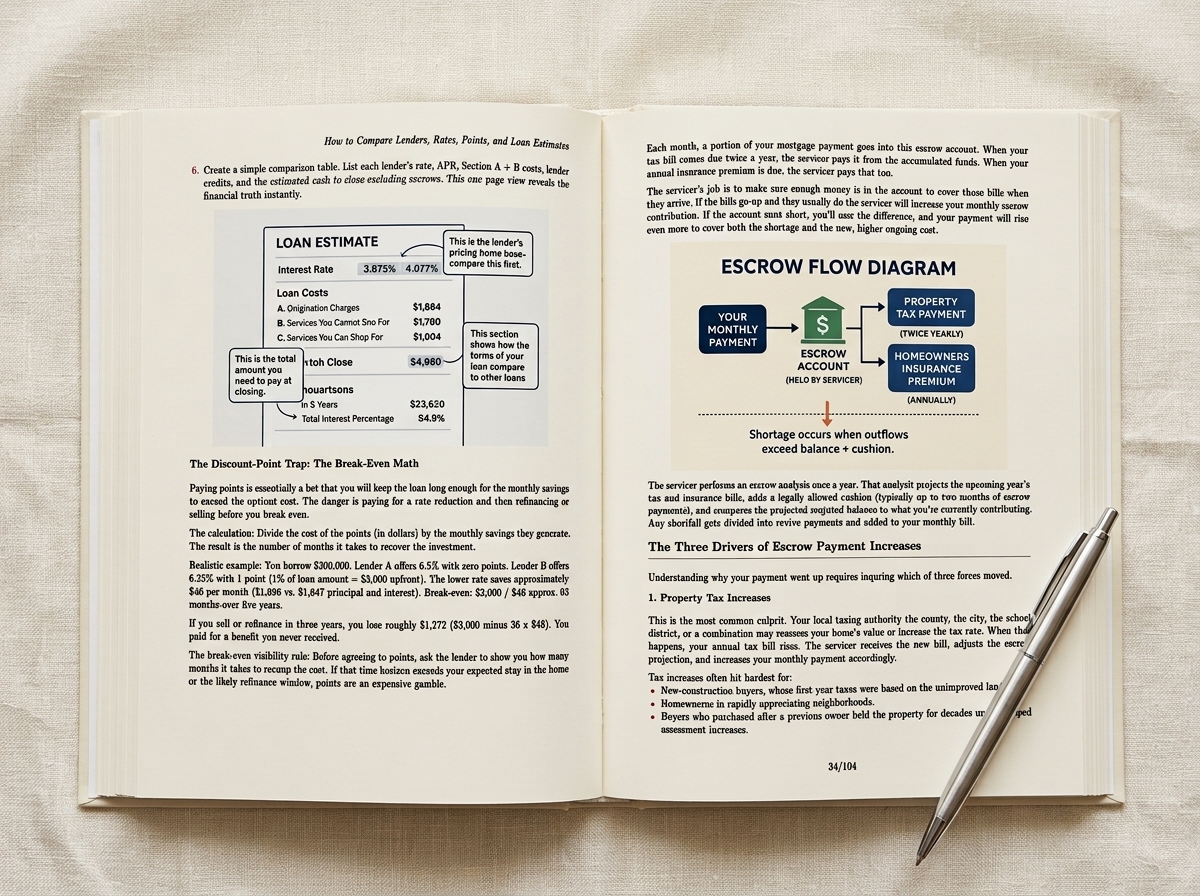
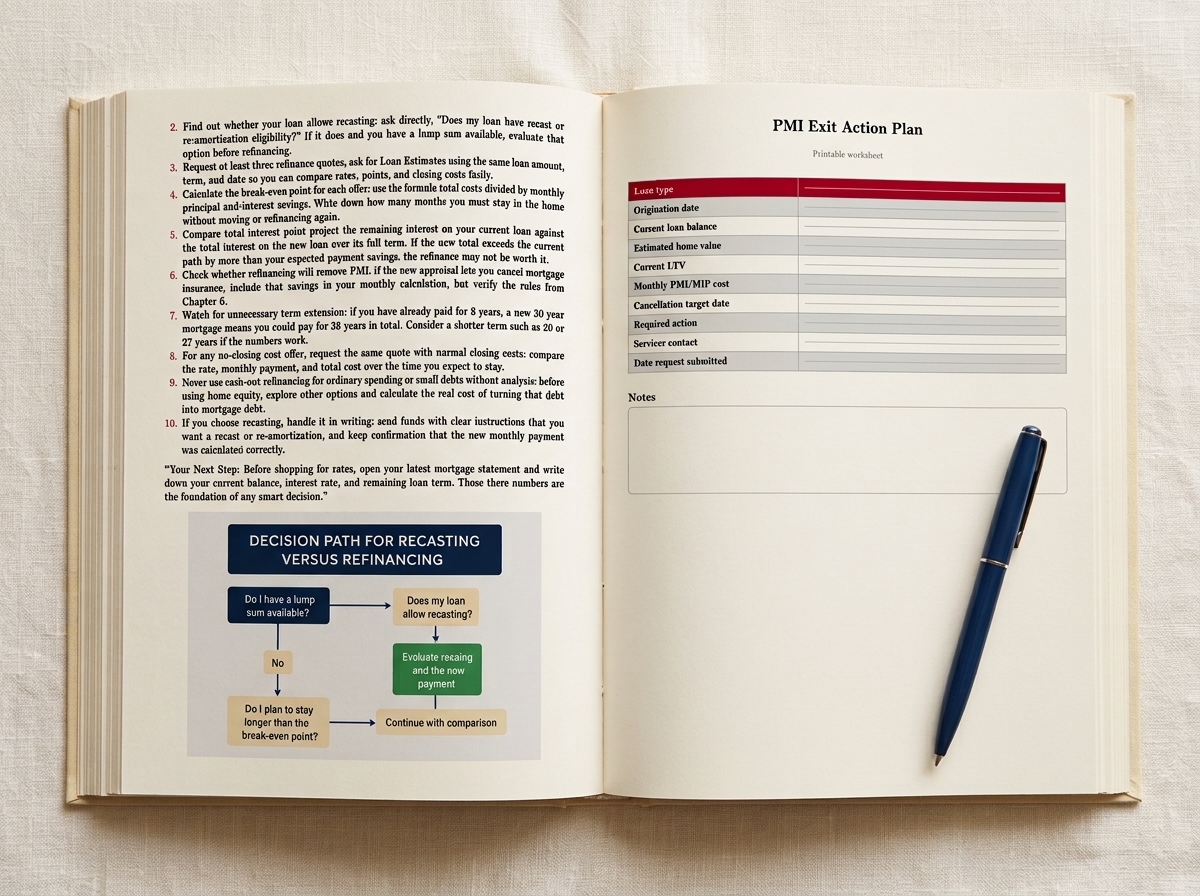
— Included free with the complete guide —
— Reader case study —

“We came into some money and were about to refinance. Recasting was better and free.”
We had roughly $40,000 from my late father's estate and everyone assumed we would refinance to bring the payment down. Chapter 16 introduced a word I had never heard: recasting. You put the lump sum against principal and the lender re-amortises the remaining balance over the remaining term, so the payment drops permanently and you keep your original interest rate and your original term. There were no closing costs and the fee was $250. Refinancing would have cost us thousands and reset the clock on a rate we would never get again.
Get the same book Nadia used — $19.99 →Digital Edition
Complete eBook + all 7 printable tools
SAVE $39.01 TODAY — LIMITED TIME
◷ 00:27:42 · Price returns to $59 when the timer hits zero
🔒 Secure checkout · Visa · Mastercard · PayPal · 7-day guarantee
This offer ends in
When the timer hits zero, the price returns to $59.
— Reader case study —

“I lost my job and waited three months before I called them. That was the mistake.”
I thought if I could just catch up quietly nobody would need to know. By the time I called I was three payments behind, the account had already been referred, and half the options that existed at month one were no longer on the table. Chapter 21 is blunt about this: the protections available to homeowners are almost all front-loaded, and the single worst thing you can do is go silent. I did eventually get a modification, but it took eight months and a great deal of damage that a phone call in week one would have avoided entirely.
Get the same book Marcus used — $19.99 →
— Everything you get today —
— Reader case study —

“A man offered to save my house. He wanted me to sign the deed over first.”
He arrived with a printed folder and a very calm voice, and he said he would negotiate directly with the lender and I should stop talking to them and send my payments to him instead. Chapter 24 lists the warning signs almost word for word — upfront fees, instructions to cut off contact with your servicer, and any request to transfer title. I recognised three of them while he was still sitting in my kitchen. I would have signed. I have no doubt at all that I would have signed.
Get the same book Eileen used — $19.99 →— No-risk reading —
Read it, run the escrow audit on your own statement, and check whether your PMI should already be gone. If it doesn't show you at least one number on your own mortgage worth fixing — or it simply isn't what was promised — email us within 7 days for a full refund. No forms, no runaround.
— Questions, answered —
More than half the book is about the years after closing, which is where most of the money is actually lost. Escrow recalculations, PMI you should have stopped paying, force-placed insurance, servicer transfers and errors, recasting, hardship options — every one of those is a live decision on a loan you already have. Existing homeowners tend to get more out of this than buyers do.
No, and one full chapter is about when refinancing is the wrong answer. Recasting, targeted extra payments, escrow correction and PMI removal all lower costs without touching your interest rate or resetting your term. Refinancing is one tool among several and it is frequently the most expensive one.
Some terminology is US-specific — escrow, PMI, Loan Estimate. The underlying mechanics are near-universal: every mortgage market has payment recalculations, insurance requirements tied to the loan, servicer transfers, early-repayment maths and hardship processes. If you are outside the US the logic transfers, but you will need to map the terms onto your own system.
No. Every chapter follows the same seven-part shape: the problem, why it happens, what it can cost, the warning signs, what to do, what not to do, and a checklist. If you can read a bank statement you can use this book. The seven printable tools exist precisely so you never have to hold anything in your head.
Yes, and it is the most time-sensitive part of the book. Chapters 21 through 25 cover what to say to a servicer, the differences between forbearance, deferral and modification, how to dispute servicer errors, how to recognise a foreclosure rescue scam, and how to sell under pressure without being taken advantage of. If you are behind, read those five chapters first, tonight.
An instant PDF download of the complete guide — 27 chapters across 6 parts, roughly 120 pages — plus all seven printable tools: the Mortgage Document Checklist, Questions to Ask Every Mortgage Lender, the Annual Escrow Audit Worksheet, the Refinance and Recast Comparison Sheet, the Mortgage Servicer Call Log, the Homeowner Financial Emergency Checklist, and the Mortgage Red Flags Quick Reference Card. Reads on phone, tablet and computer, yours permanently, no subscription, nothing ships.
— This season, protect your home —
Download it tonight and run the escrow audit on the statement you already have in a drawer. The mistakes in this book are not exotic — they are on ordinary documents that arrive in ordinary post, and they cost families tens of thousands because nobody ever said what to look for.
Get the eBook — $19.99 →One-time secure payment · instant PDF to your email
🔥 Price returns to $59 when the timer hits zero